
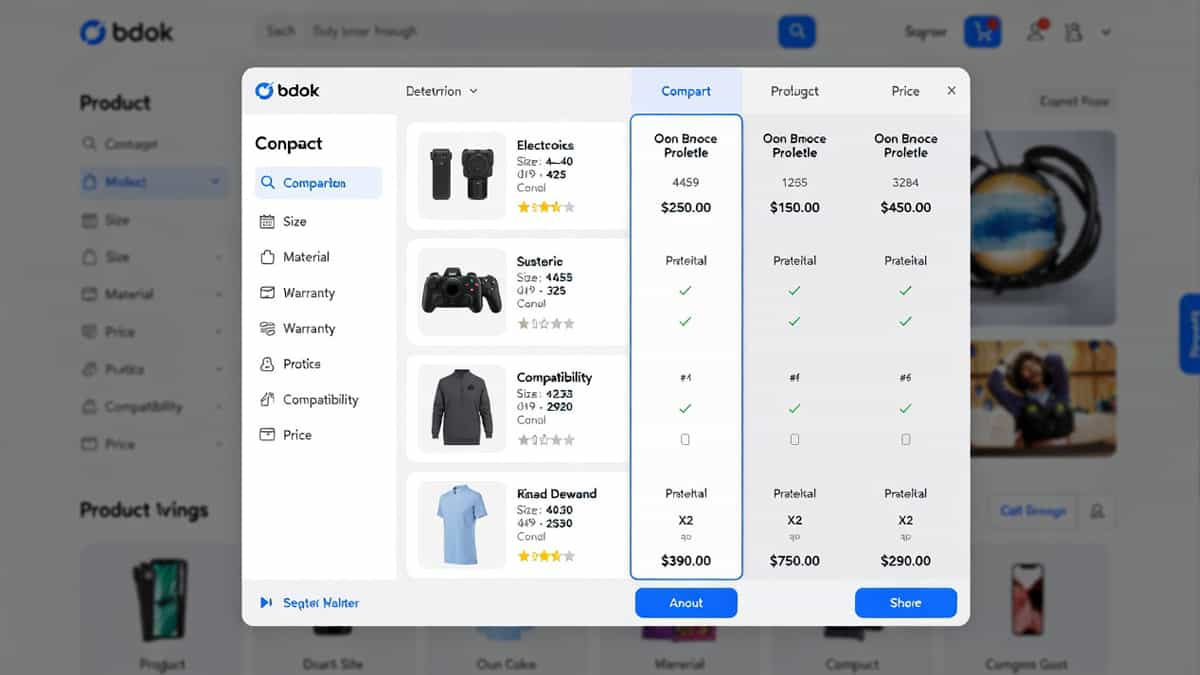
Online shoppers rarely buy the first item they see. Even when they’re interested, most people want reassurance that they’re choosing the right option. When a store does not support that decision process, shoppers leave to compare elsewhere, often on competing sites. Product comparison tools help keep buyers engaged on your store while they evaluate options.
Instead of forcing customers to jump between product pages or open multiple browser tabs, product comparison tools allow them to see differences side by side in one place. That convenience reduces friction and increases the chance that the purchase happens on your site.
For online sellers, especially those building independent ecommerce stores, product comparison tools are not just a usability feature. They are a sales and trust tool that supports clearer decision making.
Why Shoppers Rely on Comparison Tools
Most shoppers are not trying to find the cheapest option at all costs. They are usually trying to confirm fit, function, or suitability. Size differences, materials, warranties, and intended use often matter more than small price gaps.
Product comparison tools remove mental effort from the buying process. When customers can clearly see how products differ, they are more confident in their choice. That confidence reduces hesitation at checkout and lowers the risk of returns caused by misunderstanding.
This matters most in categories where specifications influence satisfaction, such as electronics, home goods, apparel variations, and functional accessories.
Using Comparison Tools Without Overcomplicating Your Store
Many sellers assume product comparison tools require custom development or complex configuration. In reality, most ecommerce platforms already support comparison features through native options or add ons.
The key is choosing comparison tools that integrate cleanly with your catalog and work properly on mobile devices. A tool that looks good on desktop but fails on a phone creates more problems than it solves.
Effective comparison tools focus on information buyers actually use. Size, material, warranty, compatibility, and price belong in comparisons. Internal product codes and backend identifiers do not. The goal is clarity, not data overload.
Design and Usability Considerations That Affect Sales
The layout of product comparison tools directly affects how shoppers interact with them. A cluttered or hard to read table discourages use. Clean spacing, readable fonts, and consistent formatting make comparisons easier and faster.
Mobile usability is critical. Comparison tools should scroll smoothly and remain readable without zooming or horizontal dragging. Since mobile traffic accounts for a large share of ecommerce visits, poor mobile performance undermines conversions.
Another overlooked detail is purchase flow. Comparison tools should allow shoppers to add items to the cart directly from the comparison view. When customers are ready to decide, they should not have to backtrack through multiple pages.
Keeping Product Comparison Tools Accurate and Trustworthy
Comparison tools are only as reliable as the information they display. Outdated specs, incorrect pricing, or missing details quickly erode trust and increase customer service issues.
Successful sellers treat comparison data as part of their core product management process. When a product is added or updated, comparison information should be reviewed at the same time. This habit prevents inconsistencies that lead to confusion or refunds.
Assigning responsibility for data accuracy keeps comparison tools reliable. A few minutes of maintenance prevents long term problems.
Choosing Which Products Should Be Compared
Not every product benefits equally from comparison functionality. Comparison tools are most effective in categories where buyers naturally evaluate options before committing.
Products with multiple variations, overlapping use cases, or feature differences are ideal candidates. Simple products with minimal differentiation often do not need side by side comparisons and may convert better with streamlined listings.
Sellers should review their catalog to identify where shoppers are most likely to hesitate or ask questions. Those areas benefit most from product comparison tools.
The Long Term Value of Product Comparison Tools
Product comparison tools support better outcomes for both buyers and sellers. Buyers gain clarity and confidence. Sellers benefit from higher conversion rates, fewer returns, and stronger trust.
Rather than pushing shoppers to decide quickly, product comparison tools respect how people actually shop online. Informed buyers are more satisfied buyers, and satisfied buyers are more likely to return. For online sellers sourcing from verified wholesalers and building sustainable ecommerce businesses, product comparison tools are a practical investment in usability, credibility, and long-term growth.