
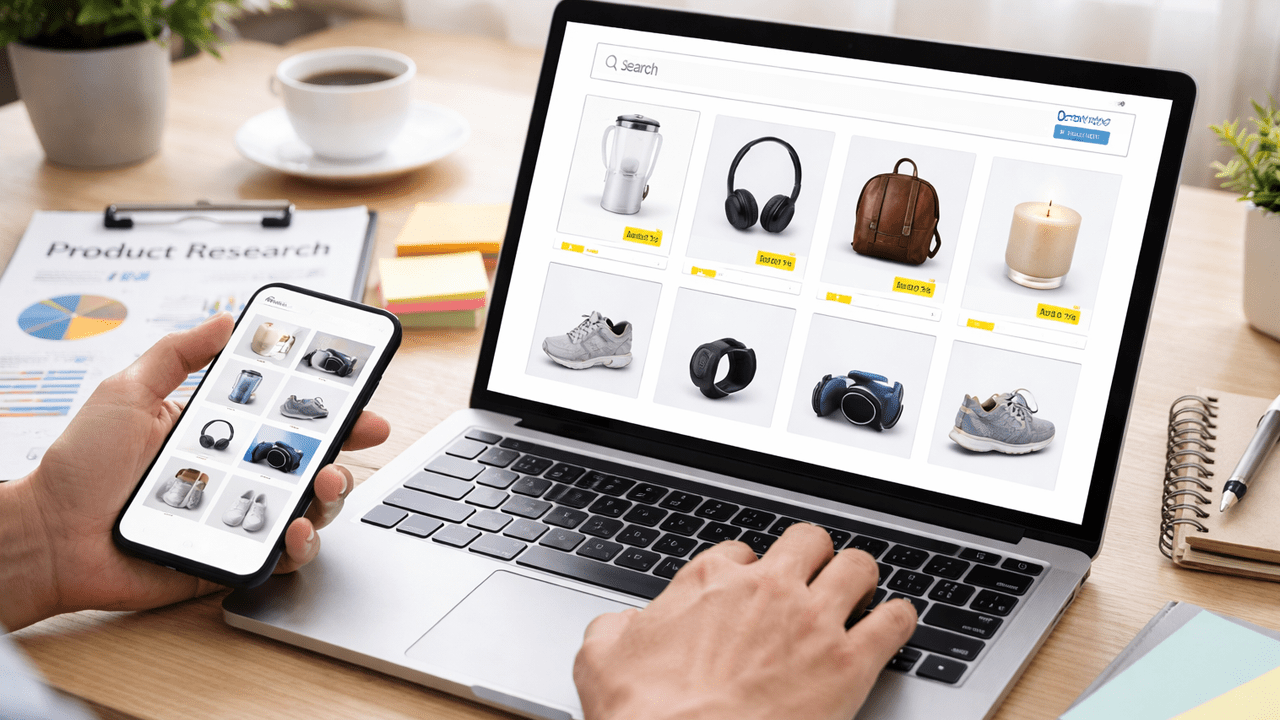
Choosing products to sell online is one of the most common points where new and experienced sellers lose momentum. Many sellers believe that success depends on uncovering a flawless product that somehow guarantees sales. They spend weeks reviewing supplier catalogs, monitoring trends, and comparing what other sellers are doing, assuming that the right product will remove uncertainty from the business.
In reality, choosing products to sell online rarely fails because the product itself is wrong. It fails because sellers misunderstand how buyers make decisions and how ecommerce businesses actually succeed. There is no perfect product that works automatically. The market does not reward discovery alone. It rewards execution, positioning, and consistency.
Why Product Perfection Is a False Target
One of the most overlooked realities of choosing products to sell online is that identical products succeed or fail depending on how they are presented. The same item can generate steady sales for one seller while producing no traction for another. The difference is not the product. It is the experience built around it.
Buyers respond to relevance, clarity, and perceived value, not novelty for its own sake. Sellers who chase perfection often miss the practical factors that influence purchasing decisions every day.
How Buyers Actually Decide What to Purchase
When sellers focus exclusively on choosing products to sell online based on uniqueness, they often ignore what customers actually buy. Most purchases are emotional first and logical second. Products represent outcomes, identity, or relief from a problem.
Successful sellers understand that products are vehicles for meaning, not just inventory. They focus on how the product fits into the buyer’s life rather than how rare or clever it appears on paper.
The Role of Context and Positioning
This is why sellers who perform well do not endlessly rotate products. They select items with existing interest and build stronger context around them. Choosing products to sell online becomes more effective when sellers understand who the buyer is, what problem the product solves, and how it fits into daily routines.
Clear positioning reduces hesitation and builds confidence. Without it, even good products struggle to gain traction.
Why Presentation Drives Perceived Value
Presentation plays a central role in ecommerce performance. Product descriptions that read like technical documentation fail to connect with buyers. Clear, benefit focused messaging helps customers imagine ownership and use.
Two sellers may offer the same product, but the seller who explains how it improves everyday life creates more perceived value than the seller who lists specifications. Choosing products to sell online is only the starting point. How the product is framed determines its success.
The Buying Experience Matters More Than Product Variety
The broader customer experience also influences outcomes. Buyers make judgments based on trust signals long before checkout. Store layout, imagery, branding consistency, and tone all affect whether a product feels legitimate or disposable.
Improving the buying experience often produces better results than adding new products. Sellers who understand this build stronger businesses with fewer items.
Thinking Beyond the First Sale
What happens after a purchase matters just as much. Sellers who communicate clearly, set expectations, and reinforce the buyer’s decision build long term value. Customers who feel confident after buying are more likely to return and recommend the business.
Choosing products to sell online without considering the full customer journey limits growth potential.
Why Trends Are Not a Long Term Strategy
Another common mistake is treating trends as a business plan. While trends can create short term spikes, they rarely support sustainable growth. Sellers who repeatedly abandon products in search of the next opportunity struggle to build brand recognition or loyalty.
Choosing products to sell online works best when paired with long term thinking rather than short term speculation.
Building a Repeatable Product Strategy
Successful businesses focus on consistency. They refine messaging, improve usability, and learn from customer behavior. This allows sellers to adapt without starting over.
Instead of chasing perfection, they focus on alignment between product, audience, and experience.
Choosing Products to Sell Online With Confidence
Ultimately, choosing products to sell online is less about discovery and more about discipline. Sellers who understand their market, communicate value clearly, and maintain consistency are not dependent on trends or rare finds.
That discipline starts with sourcing from legitimate suppliers. Tools like WorldwideBrands.com help sellers identify the best dropshipping suppliers and verified wholesalers and product lines with existing demand, removing guesswork at the sourcing stage and allowing sellers to focus on positioning, presentation, and customer experience instead of supplier risk.
The most reliable ecommerce businesses are built by sellers who stop searching for ideal products and start building meaningful experiences around products people already want. When that shift happens, choosing products to sell online becomes a repeatable, scalable process rather than a guessing game.