
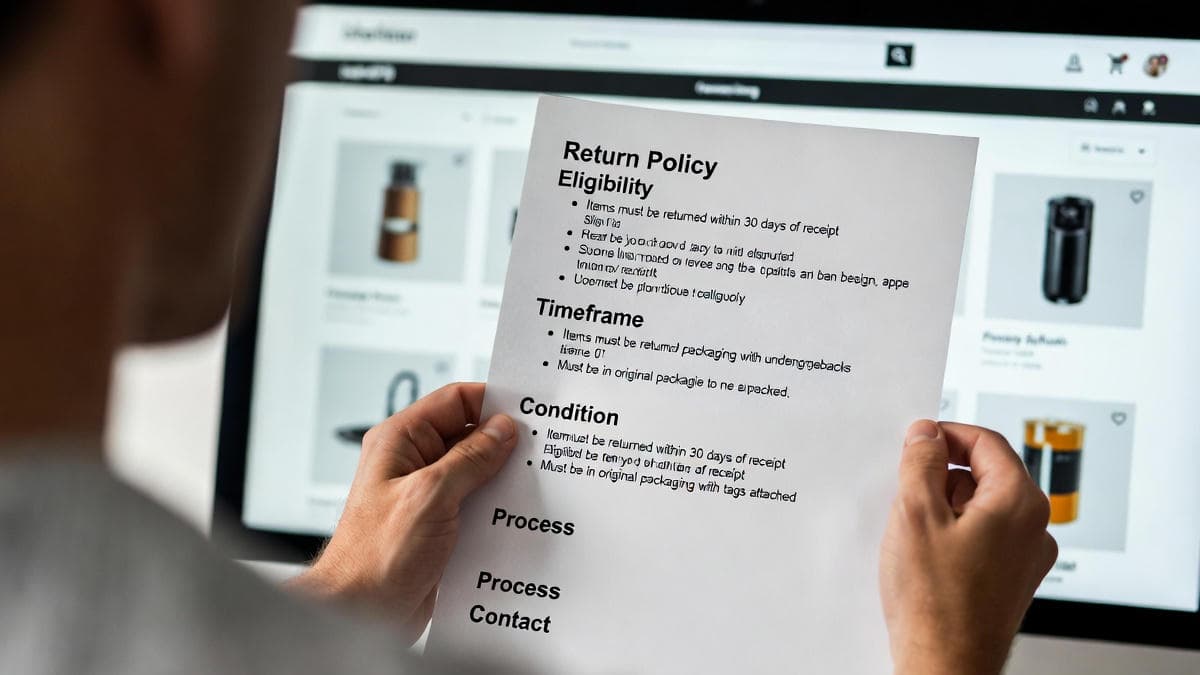
Disputes are one of the most underestimated risks in ecommerce. They do not just result in refunded transactions. Over time, repeated disputes damage your standing with payment processors and can eventually threaten your ability to accept payments at all. One of the most effective ways to reduce this risk is by setting expectations clearly before a customer ever places an order, starting with a well written ecommerce return policy.
Most disputes do not come from dishonest customers. They come from uncertainty. When buyers cannot quickly understand how returns, shipping delays, or refunds are handled, they look for certainty elsewhere. That often means contacting their credit card company, which immediately escalates a manageable issue into a formal dispute.
A clear ecommerce return policy helps prevent that chain reaction.
Policies Set Expectations Before Problems Begin
Customers rarely read policies because they enjoy them. They read them when something goes wrong. At that moment, clarity matters more than tone or marketing language. If your ecommerce return policy is difficult to find, overly vague, or filled with conditional language, customers tend to assume the worst.
That assumption leads directly to chargebacks.
Clear policies work because they remove ambiguity. When customers know how long they have to return an item, what condition it must be in, and how refunds are issued, they are far more likely to follow your process instead of bypassing it.
An effective ecommerce return policy also protects the seller. It establishes documented terms that can be referenced if a dispute does occur. Without that documentation, you are relying on explanations after the fact, which rarely works in your favor.
The Core Policies Every Store Needs
While this article focuses on the ecommerce return policy, it does not exist in isolation. A professional online store also needs a shipping policy, privacy policy, and terms of service. Together, these policies address the majority of questions customers have before and after a purchase.
What matters most is not legal complexity but readability. Policies should be written in plain language, easy to scan, and placed where customers expect to find them. Hiding policies in fine print at the bottom of a site increases confusion and undermines trust.
How a Strong Return Policy Reduces Disputes
A clear ecommerce return policy lowers dispute risk in several practical ways. Customers who understand that returns are allowed within a defined window are less likely to panic when something goes wrong. Customers who know realistic shipping timelines are less likely to assume fraud when delivery takes longer than expected.
Language also matters. Vague phrases such as “returns accepted at our discretion” create frustration and uncertainty. Clear yes or no rules give customers confidence that there is a fair process in place.
As businesses grow, policies must evolve as well. Changes in shipping regions, carriers, or fulfillment timelines should be reflected in policy updates. Outdated information creates more problems than no information at all.
Professionalism Shows in the Details
An ecommerce return policy will not increase conversions on its own, but it plays a critical role in protecting long term stability. Sellers who take policy clarity seriously tend to experience fewer disputes, fewer chargebacks, and fewer interruptions to their payment processing.
Professional ecommerce businesses treat policies as part of operations, not filler content. They understand that trust is built by removing uncertainty before it becomes a problem.
A clear ecommerce return policy sets the rules before money changes hands. That single step can prevent months of unnecessary conflict later.